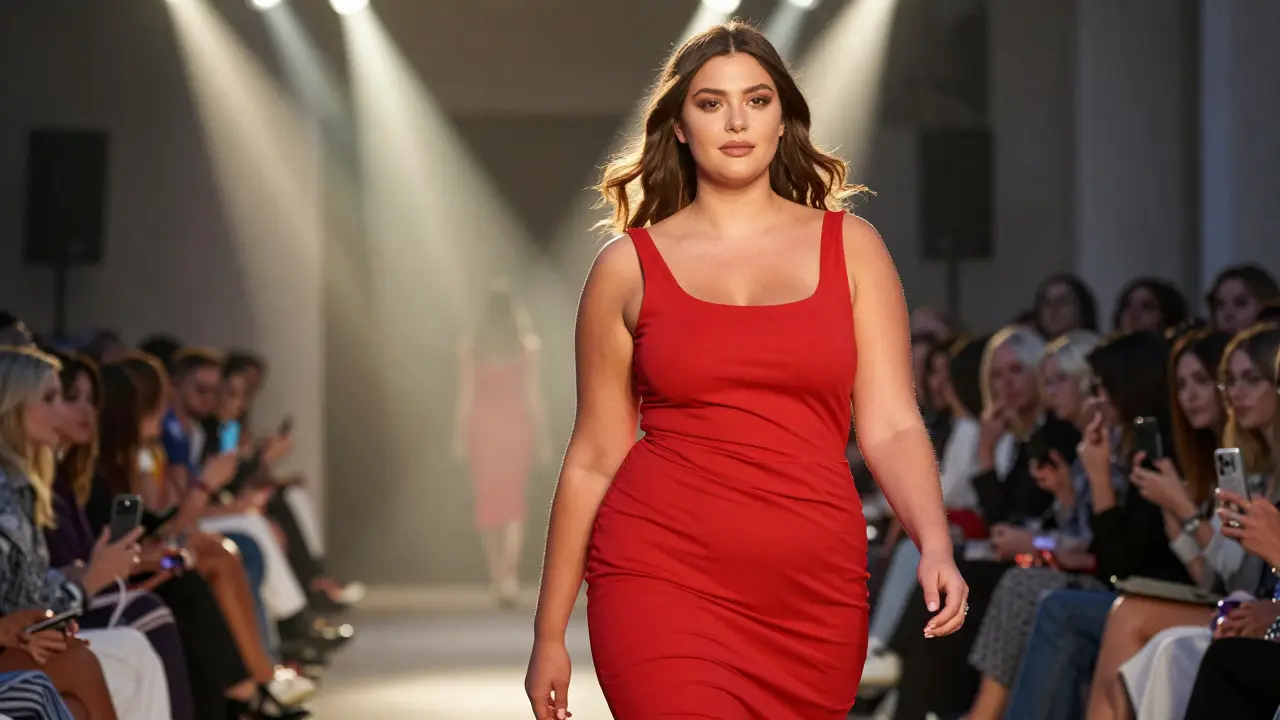
Why Curvy Models Are Changing Fashion Forever
You’ve seen them on billboards, in magazines, and scrolling past you on Instagram-curvy models who don’t fit the old mold of fashion. And guess what? They’re not just a trend. They’re a revolution. For decades, fashion told us there was only one way to look beautiful: thin, tall, and angular. But today, that’s changing. Real women with real curves are walking runways, starring in ad campaigns, and proving that beauty isn’t a size-it’s a presence.
What Exactly Is a Curvy Model?
A curvy model isn’t just someone who’s a little fuller in the hips or bust. She’s typically a size 12 or above, with defined curves in the bust, waist, and hips. The fashion industry often defines curvy as sizes 12-22, but the real definition? It’s about proportion. A curvy model has an hourglass or pear shape, and she carries confidence like armor. Unlike plus-size models who might be larger in overall volume, curvy models emphasize shape and structure. Think of it like this: a curvy model isn’t just bigger-she’s balanced, sculpted, and intentionally celebrated for her natural form.
Why This Matters More Than You Think
When you see a curvy model in a magazine, it’s not just about fashion. It’s about identity. For millions of women, seeing someone who looks like them on a runway means: you’re not broken. For years, girls grew up thinking they needed to shrink themselves to be worthy. They skipped meals, avoided mirrors, or hid in baggy clothes. But now? A 16-year-old in Sydney can open her phone and see a curvy model rocking a red dress on a Milan runway-and suddenly, her body doesn’t feel like a mistake. That’s power. That’s change.
It’s not just about self-esteem either. Brands that embrace curvy models are seeing real results. A 2024 study by the Fashion Institute of Technology found that campaigns featuring curvy models had 37% higher engagement than those using only straight-size models. Sales for inclusive brands like Universal Standard and Savage X Fenty jumped by over 50% in the last two years. This isn’t just feel-good marketing-it’s smart business.
Who Are the Curvy Models Leading the Movement?
Let’s name some names you’ve probably seen but maybe didn’t know:
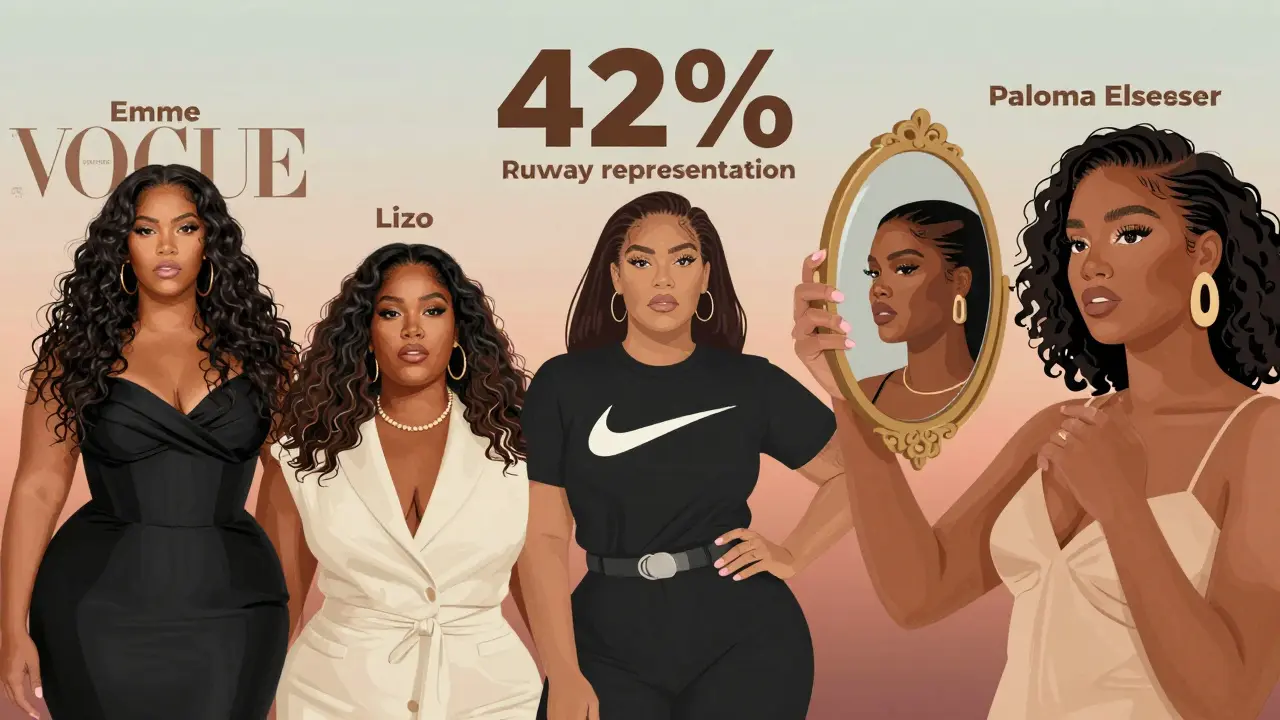
- Emme-one of the first curvy models to break into mainstream fashion in the 1990s. She paved the way when no one else would.
- Lizzo-yes, she’s a singer, but she’s also a fashion icon. Her red carpet looks on Vogue and Harper’s Bazaar have redefined glamour.
- Iskra Lawrence-a British model who calls out Photoshop and promotes body neutrality. Her Instagram is a masterclass in authenticity.
- Paloma Elsesser-walked for Fendi, Marc Jacobs, and now leads campaigns for Nike and H&M. She doesn’t just fit the mold-she breaks it.
- Angie Smith-a plus-size model from Australia who starred in a landmark campaign for David Jones in 2023. Her face was everywhere in Sydney, and for the first time, local women saw themselves reflected in a major retailer’s ads.
These women aren’t just models. They’re activists. They speak out about body shaming, call out brands that tokenize them, and demand real inclusion-not just one photo shoot per year.
How the Industry Is Changing (Slowly, But Surely)
Remember when Victoria’s Secret was the gold standard? Now, their entire brand has been rebuilt around inclusivity. They replaced their old Angels with a diverse cast of curvy, transgender, and disabled models. Even fast fashion giants like Zara and H&M have added curvy lines to their main collections-not as a separate “plus-size” section, but integrated into the regular lineup. That’s huge.
Designers are catching on too. In 2025, London Fashion Week featured 42% of its runway models as curvy or plus-size-up from just 7% in 2019. Brands like Chromat and Universal Standard design clothes specifically for curvy bodies, not just scaled-up versions of straight-size patterns. That means better fit, better fabric drape, and yes-better confidence.
What’s Still Missing?
Don’t get it twisted-progress isn’t perfect. Many brands still use curvy models as a checkbox. One campaign. One ad. Then back to the same skinny faces. Some designers still refuse to make sizes above 14. And the media? Still obsessed with “before and after” stories that frame weight loss as the only path to worth.
Real change means: no tokenism. No “one curvy model per show.” No hiding them in the back row. It means curvy models on every cover, in every editorial, in every ad. It means styling them the same way as straight-size models-not with baggy tunics to hide their shape, but with tailored blazers, bodycon dresses, and bold colors that celebrate their curves.
Where You Can See Curvy Models in Australia
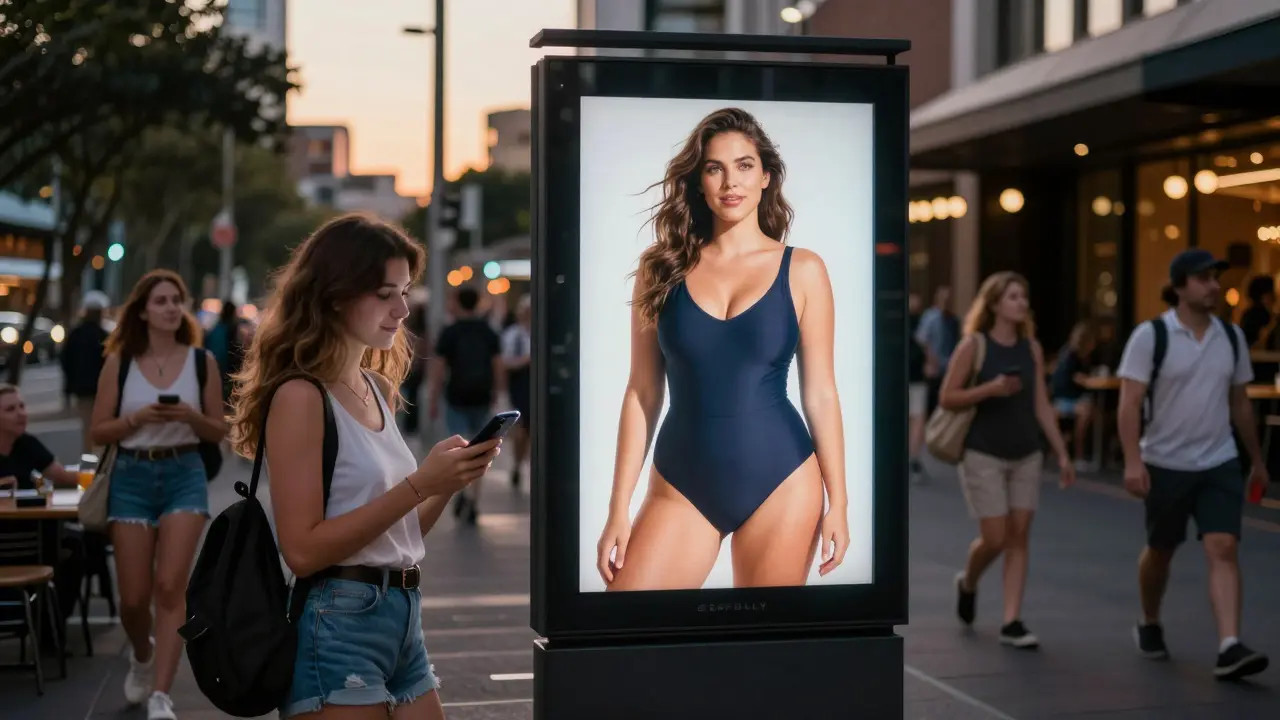
Here in Australia, the movement is gaining serious momentum. David Jones, Myer, and Country Road all launched dedicated curvy lines in 2024. Sydney’s own fashion week now features a “Body Positive Runway” every season. You’ll find curvy models in campaigns for Kookai, Seafolly, and even the Australian Olympic team’s activewear line.
Instagram is where the real action is. Follow hashtags like #CurvyAndProud, #BodyPositivityAU, or #AustralianCurvyModels. You’ll find local stylists, photographers, and small boutiques showcasing real women-not airbrushed illusions.
What to Expect When You See a Curvy Model in Fashion
When a curvy model walks down the runway or stares into the camera for a campaign, you’ll notice something different. She’s not trying to hide. She’s not apologizing. She’s owning it. Her posture is strong. Her smile is real. She’s wearing clothes designed for her body-not stretched over it.
And the clothes? They’re stunning. Think deep V-necklines that flatter the bust, high-waisted pants that hug the hips, and structured jackets that cinch at the waist. Designers are finally learning how to cut for curves-not just add extra fabric. You’ll see ruching, darts, and seams placed to enhance shape, not disguise it.
How to Support the Movement
- Buy from brands that feature curvy models in their main collections-not just a “plus-size” section.
- Call out brands that use tokenism. Tag them on social media: “Where’s the next curvy model?”
- Follow and engage with curvy influencers. Engagement tells brands what matters.
- Don’t just celebrate “perfect” curves. Celebrate all bodies-fluffy, stretch-marked, scarred, and strong.
Curvy Models vs. Traditional Models: A Real Comparison
| Feature | Curvy Models | Traditional Models |
|---|---|---|
| Typical Size Range | Size 12-22 | Size 0-6 |
| Body Shape Emphasis | Hourglass, pear, apple | Rectangular, linear |
| Design Adaptation | Custom tailoring, structural seams | Standard patterns scaled up |
| Media Representation | Rising (42% of 2025 runways) | Declining (down from 89% in 2010) |
| Consumer Trust | High (73% of women say they relate) | Low (only 21% feel represented) |
Frequently Asked Questions
Are curvy models only for clothing brands?
No. Curvy models are now appearing in beauty campaigns, fitness ads, jewelry promotions, and even tech commercials. Brands like L’Oréal, Apple, and Nike have featured curvy models to show that their products work for everyone-not just a narrow slice of the population.
Do curvy models have to be fit or toned?
No. The movement is about natural bodies, not fitness standards. Some curvy models are athletic, others aren’t. What matters is how they carry themselves-with confidence and authenticity. The goal isn’t to look like a fitness model. It’s to look like yourself.
Why don’t more brands use curvy models?
Some still cling to outdated ideas that “only thin sells.” But data says otherwise. Brands that ignore curvy models are missing out on 70% of the female population. The real barrier isn’t demand-it’s old thinking. Change is happening because consumers are voting with their wallets.
Is this just a Western trend?
Not at all. Countries like Brazil, Nigeria, and South Korea are seeing their own curvy model movements. In Brazil, curvy models dominate beachwear campaigns. In Nigeria, full-bodied women have always been celebrated in fashion. This isn’t a fad-it’s a global shift toward real beauty.
Can men be curvy models too?
Yes. The term “curvy” is often used for women, but body diversity applies to everyone. Male models with fuller builds are appearing in campaigns for Tommy Hilfiger, Calvin Klein, and even luxury menswear. The movement isn’t about gender-it’s about rejecting one-size-fits-all ideals.
Final Thought: This Isn’t Just About Fashion
When you see a curvy model on a billboard, you’re not just seeing a model. You’re seeing a message: you belong. This isn’t about changing fashion. It’s about changing how we see each other-and ourselves. And that? That’s worth celebrating.