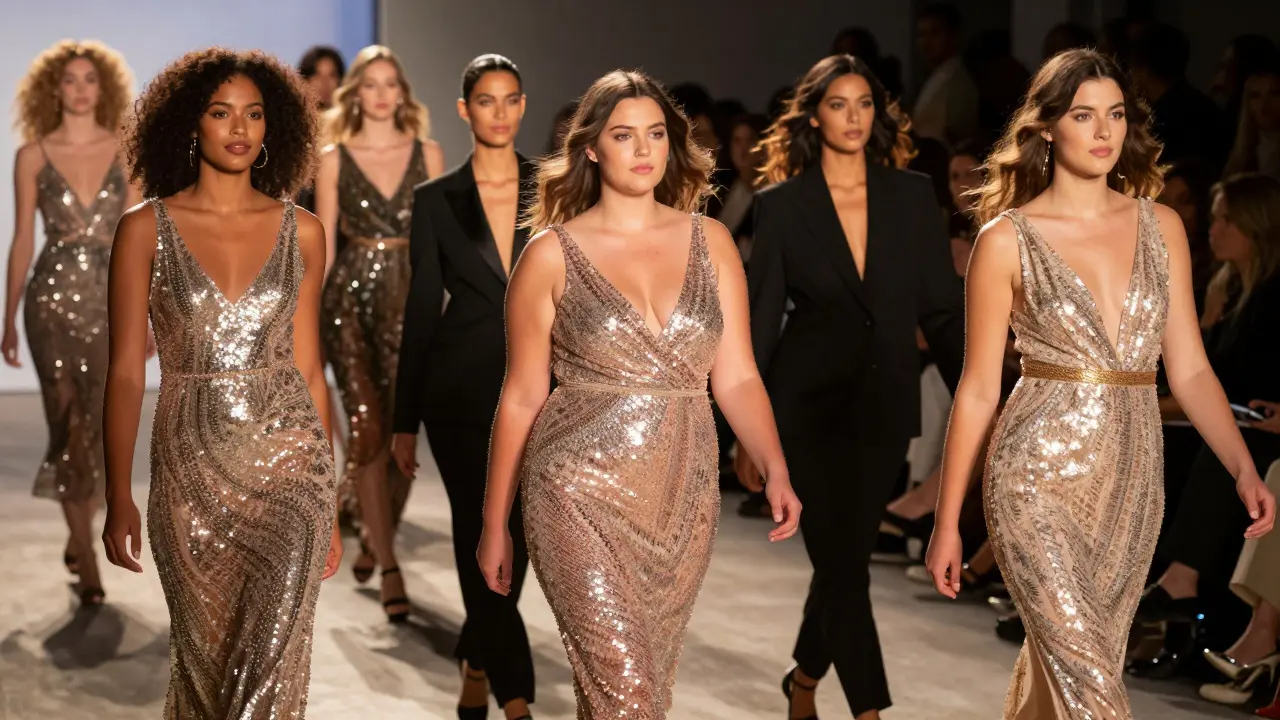
You’ve seen them on runways, in magazines, and scrolling past you on Instagram-curvy models who own their space with confidence, grace, and zero apologies. They’re not just breaking rules; they’re rewriting the whole playbook of beauty. And honestly? It’s about time.
For decades, fashion told us there was only one kind of body worth showcasing: tall, thin, and angular. But real life doesn’t look like that. Real bodies come in curves, softness, strength, and all the beautiful variations in between. Curvy models aren’t a trend. They’re a correction.
What Exactly Is a Curvy Model?
A curvy model isn’t just someone who’s ‘a little bigger’ than the average runway model. She’s typically a size 12 or above, with measurable curves-hips, waist, and bust that reflect natural human proportions. But it’s not just about numbers. It’s about presence. Curvy models bring warmth, authenticity, and a sense of relatability that flat, airbrushed bodies rarely can.
Brands like Savage X Fenty, Aerie, and Lane Bryant didn’t just hire curvy models-they built entire campaigns around them. Rihanna didn’t ask for ‘plus-size models.’ She asked for real women. And that shift? It changed everything.
Why Curvy Models Matter
Think about the last time you looked in the mirror and felt like you didn’t fit the mold. Maybe you skipped buying a new outfit because nothing in the store looked like you. Maybe you scrolled through fashion pages and felt invisible.
That’s the damage of exclusion. When fashion only shows one body type, it tells millions of people: you don’t belong here.
Curvy models flip that script. When a size 16 woman walks down the runway in a sequined dress, a 14-year-old girl somewhere sees herself reflected-not as a problem to fix, but as someone worthy of beauty, elegance, and attention. That’s not just representation. That’s healing.
Studies from the National Eating Disorders Association show that exposure to diverse body types reduces body dissatisfaction and increases self-esteem in young women. Curvy models aren’t just fashion icons-they’re mental health allies.
The Evolution of Curvy Modeling
The idea of curvy modeling didn’t start in 2025. It started decades ago-with women like Emme, who became the first plus-size model to land a major cosmetics campaign in the 90s. Then came Ashley Graham, who broke barriers on the Victoria’s Secret runway in 2016. She didn’t just walk; she redefined what a supermodel could look like.
Today, curvy models aren’t confined to ‘plus-size’ sections. They’re on the covers of Vogue, Elle, and Harper’s Bazaar. They’re walking for Chanel, Calvin Klein, and Nike. They’re not being ‘included’ as a favor-they’re being chosen because they’re the best for the job.
And it’s not just about skin tone or ethnicity anymore. It’s about body shape, height, proportion, and personality. The industry is finally catching up to the fact that beauty doesn’t come in one size-it comes in many.
Types of Curvy Models You’ll See Today
Not all curvy models are the same-and that’s the point. Here’s how they’re breaking into different spaces:
- Runway Curvy Models: Think Ashley Graham, Tess Holliday, and Paloma Elsesser. They walk for top designers and appear in high-fashion editorials.
- Commercial Curvy Models: These are the faces you see in ads for Target, H&M, and Old Navy. They wear everyday clothes that real people buy.
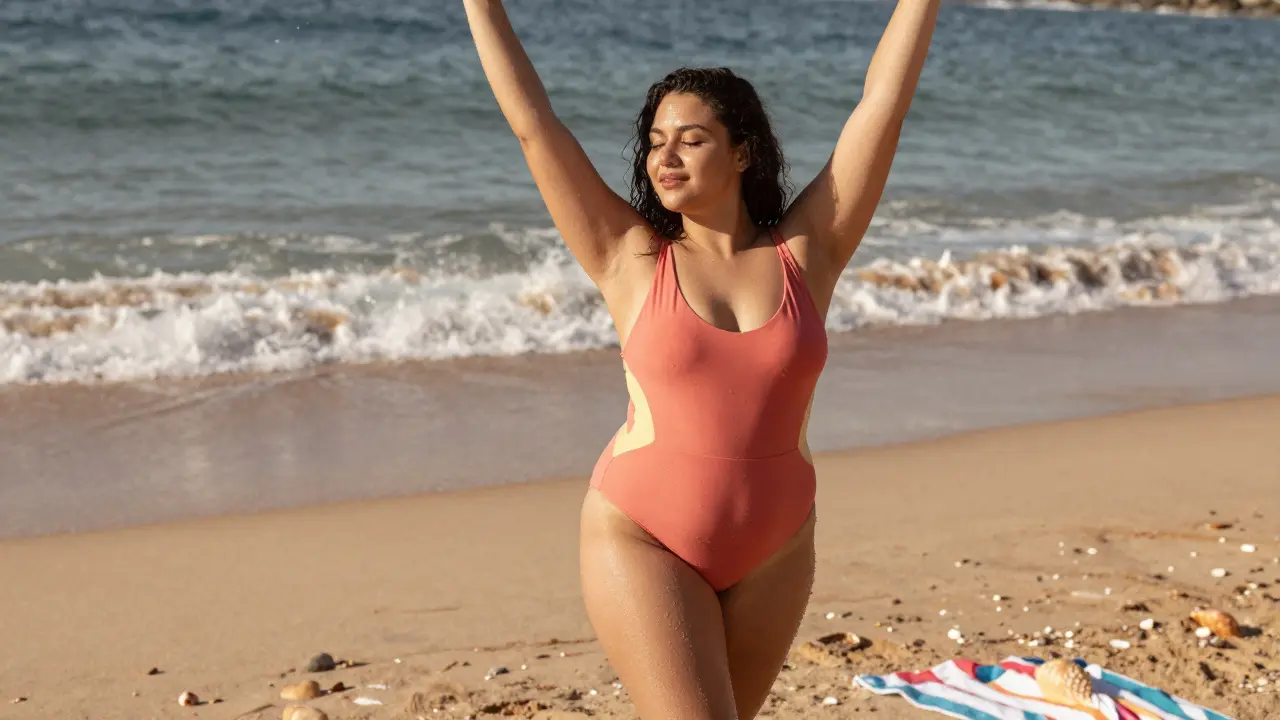
- Swimwear Curvy Models: Brands like Summersalt and Roxy now feature models who actually wear their suits. No more hiding behind layers of fabric.
- Activewear Curvy Models: Nike and Lululemon now show women with curves lifting weights, running, and stretching. No more ‘toned abs only’ policies.
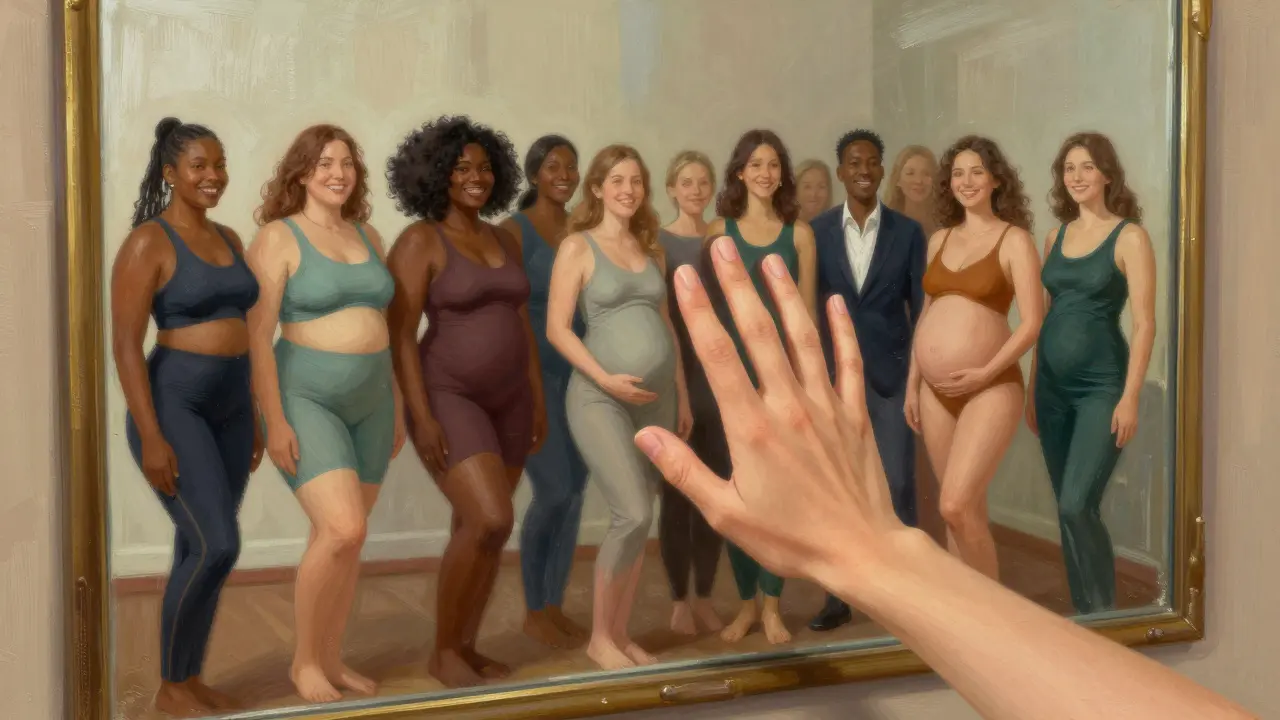
- Maternity Curvy Models: A growing niche-women who are pregnant and beautiful, showing that motherhood doesn’t erase femininity.
Each type serves a different need. But they all share one thing: they refuse to shrink themselves to fit someone else’s idea of beauty.
How the Industry Is Changing (And Who’s Still Holding Back)
It’s not perfect. Some brands still use digital stretching to make models look ‘slimmer’ in ads. Some agencies still refuse to sign women over a size 14. And some magazines still put curvy models in the ‘special feature’ section instead of the main editorial.
But the tide is turning. Social media gave power back to the people. Instagram accounts like @bodyposipanda and @i_weigh built communities of millions-not because they were polished, but because they were real. And brands noticed.
Now, consumers demand diversity. When a brand posts a photo with only one body type, people call them out. And they’re not just complaining-they’re voting with their wallets. In 2024, companies with diverse modeling campaigns saw 22% higher engagement and 15% higher sales, according to McKinsey’s Fashion Diversity Report.
What to Expect When You See a Curvy Model
You won’t see a model pretending to be someone else. You’ll see someone who moves naturally. Who laughs with her whole body. Who wears clothes that fit her, not the other way around.
Her confidence isn’t forced. It’s earned. She’s been told ‘no’ too many times to let anyone take that away now.
And when you see her on a billboard or in a commercial, you don’t think, ‘Oh, that’s a curvy model.’ You think, ‘Wow, she looks amazing.’ And that’s exactly how it should be.
Where to Find Curvy Models Today
You don’t need to search for them-they’re everywhere now.
- Instagram: Follow hashtags like #CurvyModel, #BodyPositivity, and #PlusSizeFashion. You’ll find real people, not just brands.
- Brands: Savage X Fenty, Universal Standard, Torrid, and Girlfriend Collective all feature curvy models in every campaign.
- Magazines: Elle, Marie Claire, and Refinery29 regularly feature curvy covers.
- Runway: Check out New York Fashion Week. Curvy models are no longer a side note-they’re front and center.
And if you’re looking to support the movement? Buy from brands that show real bodies. Share their posts. Call out brands that still use only one size. Your voice matters.
Curvy Models vs. Traditional Models: A Real Comparison
| Aspect | Curvy Models | Traditional Models |
|---|---|---|
| Typical Size Range | Size 12-24 (US) | Size 0-8 (US) |
| Body Shape | Curves, natural proportions | Slim, linear, minimal body fat |
| Typical Campaigns | Everyday wear, swimwear, maternity, activewear | High fashion, luxury, editorial |
| Representation | Real women, diverse backgrounds | Often homogenous, narrow beauty standard |
| Public Perception | Increasingly seen as authentic and empowering | Still idealized, but losing relevance |
What You Can Do to Support Curvy Models
You don’t need to be a model to be part of this movement. Here’s how you can help:
- Follow and engage with curvy models on social media. Likes and comments matter.
- Buy from brands that feature real bodies. Your money speaks louder than your words.
- Call out photoshopping. If a model looks unreal, say so. Brands listen.
- Don’t say ‘she’s brave for wearing that.’ She’s not brave-she’s beautiful. That’s it.
- Teach kids that beauty isn’t a size. Show them ads with diverse bodies. Talk about it.
Change doesn’t happen because someone in a boardroom decides to be ‘woke.’ It happens because millions of people decide they’re tired of the old rules.
Frequently Asked Questions
Are curvy models only for plus-size clothing brands?
No. Curvy models are now featured across all fashion categories-from luxury brands like Gucci to sportswear like Nike. They’re not limited to ‘plus-size’ labels; they’re being chosen because they represent real customers who buy from all kinds of brands.
Do curvy models earn less than traditional models?
Historically, yes. But that gap is closing fast. Top curvy models like Ashley Graham and Paloma Elsesser now command the same rates as top traditional models. In 2024, Forbes reported that the highest-paid curvy models earned over $1.2 million annually-on par with industry leaders.
Is being a curvy model harder than being a traditional model?
It’s different. Curvy models often face more rejection early on, fewer agency offers, and more pressure to conform. But they also build stronger, more loyal fan bases. Many say the emotional resilience they develop makes them more powerful in the long run.
Can someone become a curvy model without being a size 14 or above?
Yes. The industry is moving beyond strict size labels. Some brands now use terms like ‘diverse body types’ or ‘real proportions.’ If you have curves and confidence, you belong-even if you’re a size 10. It’s not about the number on the tag-it’s about how you carry yourself.
Why don’t we see more curvy models in high fashion?
Progress is happening, but slowly. High fashion has been slow to change because it’s built on tradition and exclusivity. But designers like Virgil Abloh, Maria Grazia Chiuri, and Alessandro Michele have started casting curvy models in their shows. It’s no longer a question of ‘if’-it’s a question of ‘when’ it becomes standard.
Curvy models aren’t here to replace anyone. They’re here to expand the definition of beauty so that everyone-every body, every shape, every story-has a seat at the table. And that’s not just fashion. That’s freedom.